Was That Really How It Was ? Brian Geraghty reminisces.
Taken from 150 Blian ag Fás 1851-2011 Scoil Chumín. The Boy's School Oughterard A Unique Story
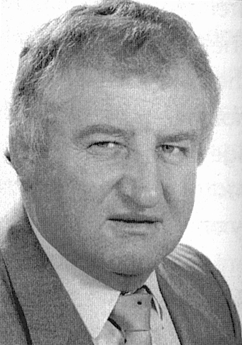
“And at that time” as the holy scribes would have written, “Hitler was only assumed dead, his army, now gone, had been replaced by Macalpine’s, there was little of anything except scudawns every Friday, and you could smell them coming at Moycullen.”
The time was the latter half of the nineteen forties and an Ireland, indeed a world, far removed from that of to-day. And it came to pass during that same time, so it did, that I completed my preliminary education at the Convent, with Sisters Albertis, Gertrude, Virginia and Dympna and headed up the Toínbhuí Road to the Boys’ School.
Just think of it. Food and tea were rationed; electricity had not caught on as yet; central heating was entirely a grate thing; apart from apples and berries we seldom saw fruit, certainly not the foreign variety, such as bananas or oranges; not everyone had shoes, and you had to fast for twelve hours before receiving holy communion. There was only the odd phone (and it stayed in the one place); fax were facts, and some of the above facts were not nice ones. And you would likely be walking very awkwardly for some time if you presented a credit card in payment.
It was impossible, almost, to get petrol, not that one would ever need it, for motorised engines were in many ways akin to children. They were seen but seldom heard. Unlike children, however, they were a rarity. Their emissions were as rare as the calls of the cuckoo, or the curlew or the corncrake were frequent. Except for two, and they were as regular as the Arab call to prayer, when in season.
One was the evening chorus of Oughterard’s seagull outboards making their way homewards, up the river by McCarthy’s meadows, or into Baurisheen or Portacarron. Their drone was like music to the ears of those who waited; an assurance that not only had their loved ones returned, but also that “the gints” were home safely. The latter were needed, for bread had to be put on the table.
Bolgers corner was our Speakers Corner. It was where real issues were raised and real decisions made. It was where you got a clip if you spoke outta turn, and where you in turn gave a clip or two a few years later to any over cheeky young fella, when you had earned your stripes. First day I went to Toínbhuí, my mother packed my lunch into my bag, straightened me up and said “Study hard and don’t waste your time, now that you are in the Boys School! Pay attention to Mrs. Flanagan and before long you’ll be going into Mr. Lee. Don’t get mixed up with bad companions…….and don’t let your father hear you are one of these corner boys holding up Bolgers shed!”
I never let her down. Neither did I let down that “university of life, which she so irreverently referred to as Bolger’s “Shed”. I served a lot of stations, all enjoyable and most at Bolger’s. There I took my early steps to manhood. For as Ralph Waldo Emerson, the American essayist, once wrote “I pay the schoolmaster, but ’tis the schoolboys that educate my son.”
We had occasional visitors to the school, who would be “on official business”. We, the pupils, looked forward to these incursions into our school life. Primarily, I might add, because they gave us the opportunity to do “nothing, as if we ever did anything much. There was, however, a big difference between doing nothing “quietly”, as we had to do during class time, and being able to kick up a big racket doing nothing, which was what we did during these visits.
One such visitor was local Garda, Sean Concannon. He came to check the rolls, and see to it that those who were listed were attending. He was a kind, gentle, smiling man, big in stature and voice, who always came through the door with a thundering “Dia dhibh and God bless all here”.
After some chit chat he would go into conclave with the Master, both bent over the roll books, in a huddle. Occasionally he would straighten up, and a symphony of words would issue, immersed in a shower bath of spittle for those within range, to triumphantly indicate a major piece of detection. “Ah hahah….hah hah..mo dhuine. I’ll be talking to him!!!” Our Inspector Clauseu would have detected a “mitcher”, who would shortly be getting a yellow card. The name would go into the black book, before Sean would take his leave, with a loud guffaw and a friendly wave.
By this time of course you’d have had lumps taken out of you with wallops from those in the desk behind, or clips of a ruler down on your ears. Of course you’d be passing on similar good wishes to those directly in front. Methods of conveyance varied. Apart from those mentioned, you could get a pinch on the backside or a pin stuck in it. Backsides also played host to rasping kicks from a twenty eight studded clog (colder months) or a probing toe (in summer), which would be stuck wherever it could do most damage.
Another such visitor was the district nurse. Her visits were never a cause celebre for me as she generally gave me a hard time. She had a sort of ritual, where she led us through a programme that saw us finish with the index finger of our right hand crossing our lips. This ensured complete silence, while she examined our eyes, ears, throats, noses and most especially our hair, before finally finishing with our shirt collars.
She was a wonderful nurse, and was totally dedicated to her work and to the people of her district. Her school visits, however, left me wide open for some serious slag- ging, once she took her leave, for the lady was my mother. It was all part of the growing-up process, however, making you realise early in life, that unlike Murphy’s dog, you gotta be able to take it, as well as dish it out, in order to survive.
History was Lee’s favourite subject. He’d rattle it out, as if he had been there on the day, and so colourfully, that we felt we had been there also. The Fir Bolgs, the Milesians, na Tuatha Dé Danann, Brian Boru, the Normans, Tone, the United Irishmen, Emmet…..we knew them all, personally.
I think Eoghan Ruadh Ó Neill was his favourite. At any rate, he would spend longer dealing with this period, than with any of the others. Once he spent about two weeks painting the picture of this great Ulster prince for us; his every step was traced, every battle described, He damn near told us whether he preferred corn flakes to porridge.
The Monday of the third week was given over to revision. Lee opened proceedings early. “Tierney” he enquired “did you ever hear of Eoghan Ruadh Ó Neill?” Everyone anxiously awaited the reply. “No sir. Never.” Lee did not flinch, nor did he bat an eyelid. He merely stared across the room towards the far wall… sad, possibly down, but not out. Slowly he began to smack his “scallop” against his “plus fours, ever so steadily at first, increasing the tempo, till he had going a real rhythm. Then it came…a measured and timely sigh, and a value judgment that clearly stated where all of us stood in his perspective.
No Sir” he repeated “No Sir…but Tierney, if he arrived into Oughterard with a fishing rod, you’d be the first one up to him selling mayflies…..wouldn’t you Tierney?” “Yes Sir.” End of story
So much for the hero of Benburb. A historical star without a doubt, but of question- able economic value to the youth of our small village beside Lough Corrib. My uncle, Sean Donnellan is buried in the churchyard behind the Moycullen Church on the Tullykyne Road. My wife, Phil, and I came down from Dublin to the burial. The celebrating priest was Father Robert E. Lee, then only recently returned from West Virginia, and a son of “the man himself.” “Why don’t you call to see him on your return journey,” said Father Lee to me as we readied to hit the road back to Dublin. “I don’t think he has too long left, and I know he would love to see you. Are you aware he opinioned in a radio interview that you were his star pupil.”
I couldn’t believe this. Me, his star pupil! No way did I deserve such a plaudit, and I wasn’t being hypocritically humble about it. However, human nature being what it is, I must admit, I was chuffed.
We called to see him in Galway. Mrs Lee welcomed us into the sitting room, where he was propped up in an easy chair, and I could see he was pleased we had called. Whilst she prepared some tea we chatted about everything, from school events to my current job. It was a wonderful conversation.
After we supped he asked herself to bring in the fiddle. As we were leaving later, she told us he had not played for an age, so he must have been happy. I sat spellbound as he played some Irish traditional jigs and reels, and then came The Cúilin, Oft in the Stilly Night and My Lagan Love. Toínbhuí came flooding back to me, bit by bit. I could see him there in the mind’s eye, fiddle under the chin, as he led us through his favourite medley. A Nation Once Again….The Clare Dragoons and others, and I began to sing them as best I could, while he accompanied me on his fiddle.
It was then I realised what he meant to us. He was the igniting force right through our school days. Like him, others from my schooldays have passed away also. May they Rest in Peace and may the Good Lord keep the remainder of us en route for as long as possible. They were wonderful days and wonderful comrades in arms, or in books, or whatever. We were of one pulse.
We were brothers
all In honour, as in one community,
Scholars and gentlemen.
(The Prelude)
Written in 2001








No Comments
Add a comment about this page